
Top Signs You Need Garage Door Service – Don’t Ignore These
The clearest signs you need garage door service are a door that reversed direction on its own, a loud pop from the torsion bar, visible cable slack, or a door that suddenly takes longer to open than it used to. Those are mechanical warnings, not cosmetic quirks, and each one points to a specific part that’s under stress and heading toward failure. Catching them early is the difference between a small repair and a torn-up door. If you’d rather not diagnose it yourself, call (866) 369-6074 and we’ll take a look.
A garage door that takes three seconds longer to open than it did six months ago isn’t “getting old.” It’s a measurable indicator that spring tension has dropped, and that spring has a specific number of cycles left before it lets go. The slowdown is the spring telling you what’s coming. In our experience around Washington Park, the homeowners who catch that early signal spend far less than the ones who wait for a snap at seven in the morning.
Your Door Is Slowing Down (This Is a Spring Signal)
A door that opens sluggishly almost always means spring tension loss, not opener motor wear. Torsion and extension springs are what actually lift the door; the opener just guides it. When a spring weakens or a coil starts to give, the motor has to work harder to compensate, and you feel that as a slow, heavy, or labored lift. Nine times out of ten, the motor is fine and the spring is the culprit.
You can verify this without touching a single spring. Pull the manual release cord to disconnect the opener, then lift the door by hand about halfway and let go.
- Door stays put: the springs are balanced and doing their job.
- Door drops or feels very heavy: spring tension is low or failing.
- Door rises on its own: the springs are over-tensioned and need adjustment.
If it’s the heavy-drop result, stop lifting it. A weakening spring can snap during that test, and a snapped torsion spring is genuinely dangerous. That’s the point where a trained technician should take over. Springs, openers, panels, full doors: one call covers it, and we treat spring repair as its own specialty because it’s the most mishandled job in the trade. Every Washington Park homeowner deserves a door that lifts with two fingers, not two hands and a grunt.
What the Noise Is Telling You (A Quick Diagnosis)
Different garage door noises implicate different components, and knowing which is which saves you from replacing the wrong part. Here’s how we read them on a service call:
- Grinding: usually worn or seized rollers dragging in the track. Left alone, grinding rollers chew up the track itself.
- Squeaking: dry hinges, rollers, or a torsion bar that needs lubrication. Often the cheapest fix on this list.
- Rattling: loose hardware (bolts, brackets, hinges) shaking as the door travels. It gets progressively louder and can loosen a panel.
- Popping or a loud bang: the sound of a torsion spring breaking or a cable slipping off the drum. If you hear a bang and the door won’t lift, that’s your spring.
Squeaking is a nuisance you can usually defer a little. Grinding and popping are not. In our experience across Washington Park, a grinding door that gets ignored for a couple of months tends to come back as a track replacement rather than a roller swap. Listen to your door. It’s a decent mechanic that way.
Visible Cable Slack or an Uneven Panel Gap
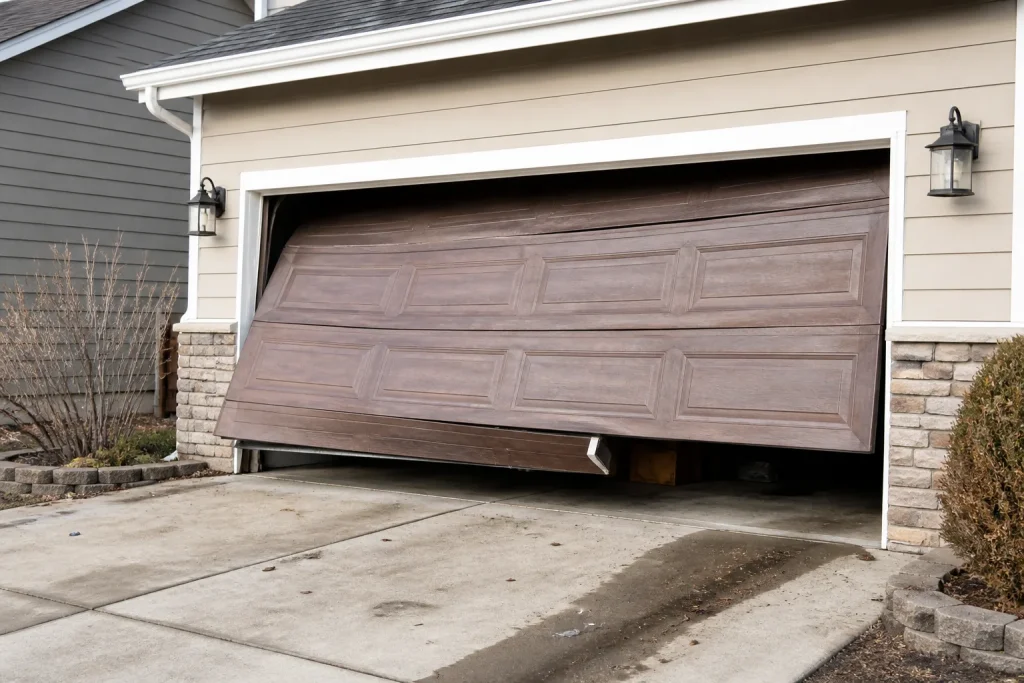
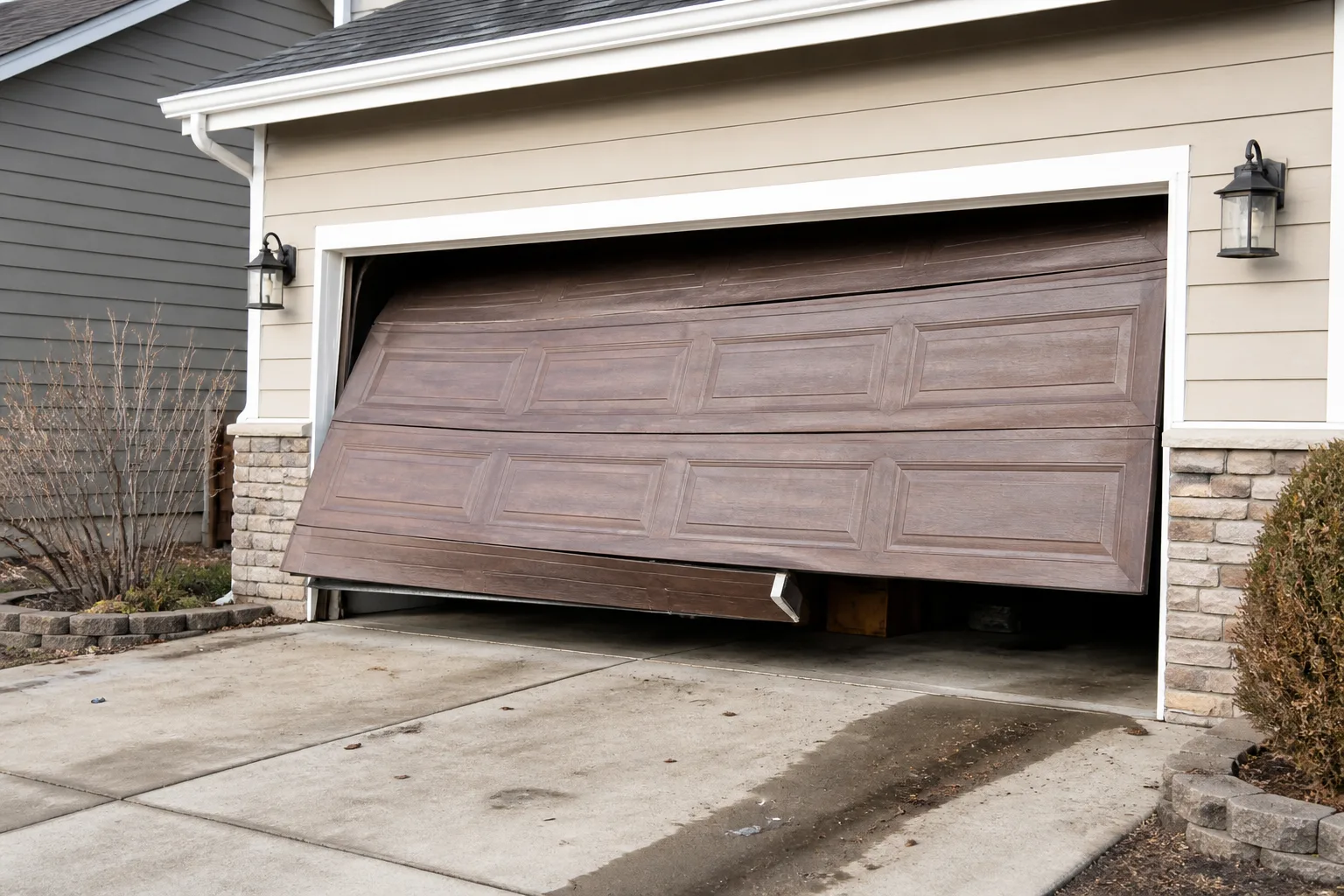
Look at the cables that run down both sides of your door. They should be taut and evenly seated on the drums at the top corners. If one side looks loose, sagging, or has clearly come off its drum, stop operating the door. Cable slack almost always traces back to a failed or failing spring that was holding the tension, and running the door in that state causes the door to lift crooked and drags the panels against the track, which is how you turn a spring repair into a full track and panel replacement.
The other tell is an asymmetric panel gap: one side of the door sits slightly higher than the other, or a horizontal gap widens on one corner as it opens. That uneven travel means the two sides are no longer lifting evenly, and cables and springs are the usual reason. It’s easy to dismiss as a door that’s “a little off.” It’s actually a system out of balance. If you see either of these, keep the door down and get it looked at. This is exactly the kind of thing we check first on any garage door repair visit in Washington Park.
A Door That Reverses Before It Closes
A door that reverses before hitting the floor, or bounces straight back up after closing, is signaling a safety-system failure, not a quirk. Two things cause it: the opener’s force calibration is set wrong (so it thinks it hit something and backs off), or the safety sensors at the bottom of the tracks are misaligned, dirty, or blocked by a cobweb or a stray leaf. Sensors are an easy check; force calibration is a setting most homeowners shouldn’t touch without knowing the opener’s limits.
This one matters more than a slow door. Your opener relies on those two systems to reverse when a person, a pet, or a bike is in the way. A door that reverses on its own is telling you that protection is compromised. If it’s a LiftMaster, Chamberlain, Genie, or Craftsman unit, the force and travel limits are set differently brand to brand, and that’s the part we know cold. We work on the brand you already have, so there’s no guesswork. If the reversal keeps happening after a clean sensor check, that’s a good moment to call for garage door opener repair rather than keep adjusting blindly.
Your Weather Seal Is Cracked or Flat (A Functional Problem)
A cracked, brittle, or flattened bottom seal is a functional issue, not a cosmetic one. That rubber strip is what keeps cold air, drafts, moisture, and the occasional determined pest out of your garage. When it dries out and loses its compression, you get a gap under the door that lets Colorado winter air straight through, which makes the garage colder and pushes your heating system harder than it should. By the time the rubber is visibly cracked across its length or no longer springs back when you press it, it’s ready to replace.
Here in Washington Park, the timing matters. Once the first hard freeze sets in and the seal has already gone stiff, you’re fighting a losing battle through the cold months. Late fall, before the freeze, is the smart window to swap it. A worn seal also lets the door rattle against the frame as it closes, which is one of the rattling noises from earlier, so replacing it quiets the door and seals the garage at the same time. Panel and seal condition is part of what we assess before recommending anything, and it’s often the smallest line on the estimate.
When to Call a Pro
Some of this you can check yourself: listen for the noise type, watch for the uneven gap, test the reversal, press the bottom seal. That’s useful information to have ready. What you should not do is tension, replace, or adjust a torsion spring, or run a door with a slack cable. Those are the jobs that send people to the emergency room, and no video makes them safe. Garage doors are all we do, and our technicians have up to 12 years of experience with the brands you’re likely to have overhead, including Clopay, Amarr, and Wayne Dalton doors. If diagnosis turns into a repair, parts supply under the same roof means fewer days between “we know what’s wrong” and “it’s fixed.”
Related services in Washington Park: if the door itself is past saving, we handle garage door installation and can talk through door options once we’ve seen yours.
The Bottom Line
Treat these warning signs as data, not decoration. A slow door means spring tension is fading. Grinding and popping mean parts are failing now. Cable slack and uneven gaps mean the door is out of balance and damaging itself every time it moves. A reversing door means your safety system is compromised. A cracked seal means your garage is leaking heat and noise. Catch any of them early and you’re usually looking at a small, targeted repair; wait, and the same problem tends to grow into panels, tracks, or a full door. It’s cheaper to listen to the door than to argue with it.
If you’re in Washington Park and need help, Garage Door Repair Washington Park offers free estimates, and the price is quoted and agreed before any work starts. Call (866) 369-6074 for a free estimate. We answer 24/7, with fast dispatch from 7am to 7pm, Sunday through Friday, and we’re closed Saturday.
Frequently Asked Questions
A door that suddenly feels heavier or opens more slowly than it used to is the first sign a spring is losing tension and heading toward failure. You can confirm it with the manual release and lift test: disconnect the opener, lift the door halfway, and let go. If it drops instead of holding, the spring is the problem. Don’t keep testing a heavy door, since a failing spring can snap during the lift. Call (866) 369-6074 and we’ll check it safely, free estimate included.
It depends on the noise. Squeaking is usually just dry hinges or rollers and is the least urgent. Grinding means worn rollers chewing the track, rattling means loose hardware, and popping or a loud bang means a spring has broken or a cable has slipped. Grinding and popping are real problems that get more expensive if ignored. If your Washington Park door is grinding or popping, call (866) 369-6074 and we’ll tell you what it needs.
No, stop using it until it’s checked. A door that reverses before hitting the floor has a force calibration problem or a sensor problem, and either one means the safety reversal system isn’t protecting what’s underneath. The sensors are easy to check for dirt or misalignment, but if it keeps reversing after that, it needs a proper look. Call (866) 369-6074 to get it sorted.
Most warning signs (springs, cables, noise, reversal, seals) are repair jobs for a door that’s otherwise structurally sound. A new door usually makes sense when the panels are badly dented or rusted through, or the door is simply at the end of its life and repairs keep stacking up. The only way to know is to have it looked at. In Washington Park we offer free estimates, and we’ll tell you honestly which side of that line your door is on. Call (866) 369-6074 to book one.
Written by the team at Garage Door Repair Washington Park.
Need Garage Door Help?
Call Garage Door Repair Washington Park - the local pro we connect you with is licensed and insured, here with fast help in Washington Park.
(866) 369-6074